ABDOMINOPLASTY (Tummy Tuck)

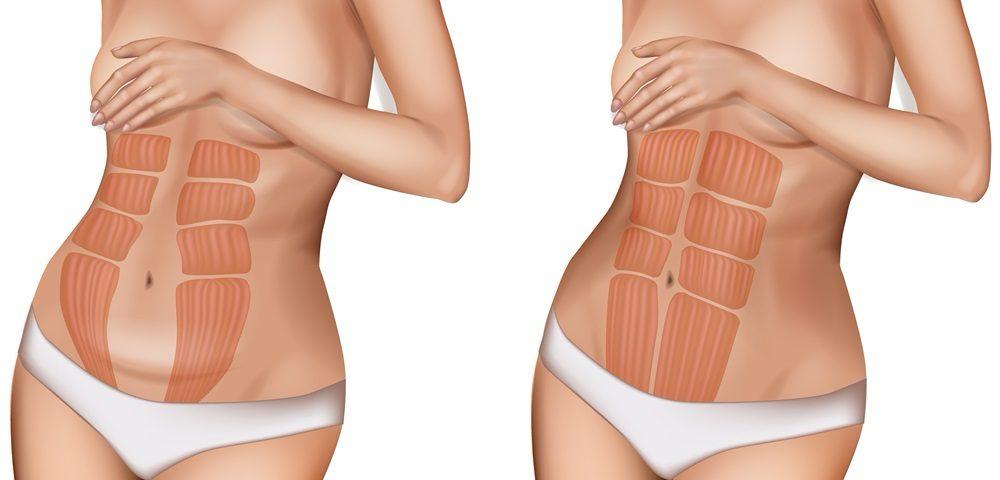
Abdominoplasty (or tummy tuck) is a surgical procedure that involves removing the skin and adipose tissue from the lower portion of the abdomen while correcting the looseness of the abdominal muscles.

ABDOMINOPLASTY

Abdominoplasty (or tummy tuck) is a surgical procedure that involves removing the skin and adipose tissue from the lower portion of the abdomen while correcting the looseness of the abdominal muscles.

Tummy Tuck Explained

A flabby abdomen is often a consequence of significant weight loss and is common in women who have had several pregnancies.

The abdominoplasty allows obtaining a slimmer abdomen and a narrow waistline.

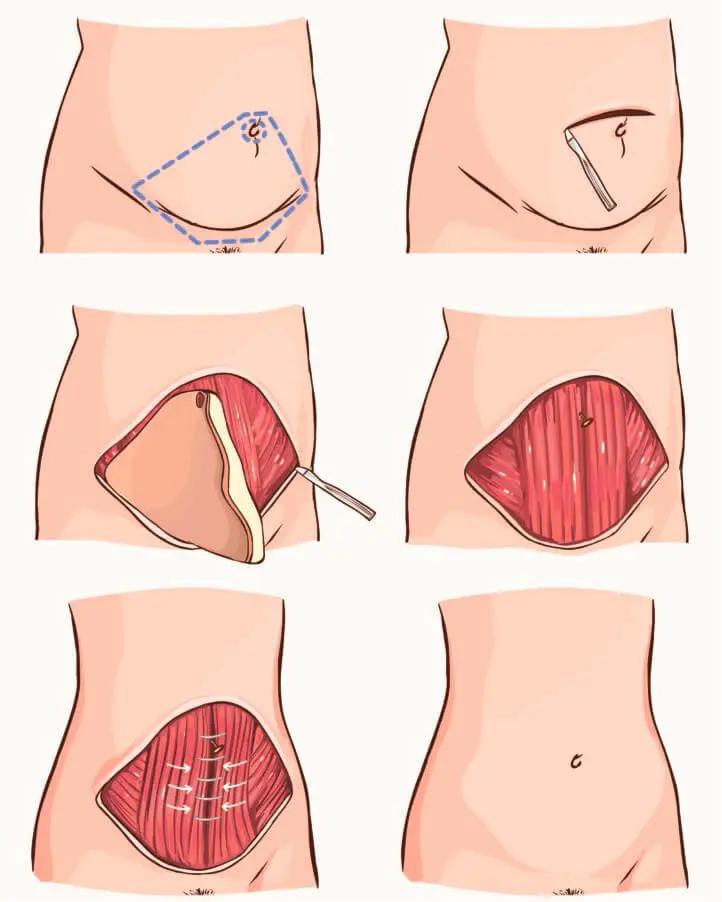
Surgery is performed in the operating room, under general anaesthesia; the skin incision is made in the upper pubic region, from one side to the other, and around the navel. The skin located below the navel is removed, while the skin of the upper abdomen is stretched downwards.

If necessary, the abdominal muscles are brought together, and the transversalis fascia will be strengthened. The navel is sutured in a new position.

If needed, drainage tubes will be inserted after surgery; they allow to suck small bleedings during the first 24 hours after surgery and will be removed after 1-2 days.

Abdominoplasty at a Glance

Surgery Time

2 hours

Final Results

6 - 12 months

Support Garments

Abdominal binder

Anaesthetic Type

General anaesthetic

Time Off Work

2 - 3 weeks

Smoking

Smoking needs to be suspended 4 weeks after surgery. Same for nicotine patches or chewing gum.

Pre Admission Tests

GP medical history. Blood test. Some more tests may be required depending on your medical history.

Exercise/Gym

6 - 8 weeks

Washing

Shower after 2 days, no bath for 1 month

Hospital Stay

Overnight

Sleeping

Sleeping elevated 45 degrees with a pillow underneath leg

Sexual Activity

4 - 6 weeks

Surgery Time

2 hours

Pre Admission Tests

GP medical history. Blood test. Some more tests may be required depending on your medical history.

Final Results

6 - 12 months

Washing

Can shower after but no bath for 1 month

Smoking

Smoking needs to be suspended 4 weeks after surgery. Same for nicotine patches or chewing gum.

Sleeping

Sleeping elevated 45 degrees with a pillow underneath leg

Anaesthetic Type

General anaesthetic

Hospital Stay

Overnight

Time Off Work

2 - 3 weeks

Exercise/Gym

6 - 8 weeks

Support Garments

Abdominal binder

Sexual Activity

4 - 6 weeks

Surgery Time

2 hours

Anaesthetic Type

General anaesthetic

Pre Admission Tests

GP medical history. Blood test. Some more tests may be required depending on your medical history.

Hospital Stay

Overnight

Final Results

6 - 12 months

Time Off Work

2 - 3 weeks

Exercise/Gym

6 - 8 weeks

Driving

Smoking needs to be suspended 4 weeks after surgery. Same for nicotine patches or chewing gum.

Support Garments

Abdominal binder

Washing

Shower after 2 days, no bath for 1 month

Sleeping

Sleeping elevated 45 degrees with a pillow underneath leg

Sexual Activity

4 - 6 weeks

Abdominoplasty explained

Is Abdominoplasty Right for You?

Generally, abdominoplasty procedures (tummy tucks) are suitable for both men and women who are in good health. It can be a useful procedure to consider if you’ve had several pregnancies or a C-section delivery.

Tummy tucks can help tighten the stomach muscles and reduce the amount of abdominal skin you have. It is also possible to incorporate the tummy tuck scar into the C-section scar.

It can also be a useful procedure if you’ve seen significant weight changes, helping to address problems posed by loose skin or excess fat around the stomach area. Note, however, that tummy tucks will not be able to remove any stretch marks outside the abdominal region.

Abdominoplasties are not suitable for anyone planning a pregnancy. The procedure should also not be viewed as a way to lose weight.

What are the Types of Tummy Tuck Procedures?

There are lots of different types of tummy tucks, but the most common is the standard abdominoplasty, where skin and fat are taken from below the tummy button, with the remaining skin then pulled together.

There is also the mini abdominoplasty, where a small slice of skin and fat is removed from the lower abdomen.

The fleur de lys abdominoplasty removes excess skin from the entire abdomen; the extended abdominoplasty is similar to the standard but leaves a bigger scar and the full-body lift is also similar to a standard abdominoplasty, but the scar runs from the front of the tummy around the body to the top of the backside.

What are the Benefits of Abdominoplasty?

There are various benefits associated with abdominoplasty procedures, with cosmetic changes being one of the most popular reasons for opting for this kind of treatment. Tummy tucks can remove excess skin and tighten muscles, as well as get rid of stretch marks.

You may also find that abdominoplasties help improve your self-confidence and self-esteem, as well as give you more motivation to lose weight and be healthier, making it easier for you to do more intense activity and exercise. 

What are the Risks of Abdominoplasty?

As with any serious surgical procedure, there is a risk of complications with abdominoplasties. It is important that you are familiar with the potential risks and discuss these fully with your plastic surgeon before going ahead with any procedure.

Risks of abdominoplasties include:

  • Skin discolouration/prolonged swelling
  • Persistent pain
  • Numbness/changes in skin sensation
  • Infection
  • Asymmetry
  • Bleeding
  • Deep vein thrombosis
  • Fluid accumulation
  • Skin necrosis

Who Will Carry out the Procedure?

Dr Domenico Mileto completed his training as a Board Plastic Surgeon in Italy and he has been practising in the UK since 2010, performing over 5000 procedures of plastic and post-bariatric surgery.

During his training, he worked at renowned plastic surgery centres in Italy, France, Spain and the UK, among these the McIndoe Surgical Centre in East Grinstead (UK), The Guy’s and St Thomas’ Hospital In London and the Centre of Cranio Maxillo-Facial and Plastic Surgery of the University of Nancy (France).

Dr Mileto is listed on the General Medical Council Specialist Registrar, as a Plastic Surgeon, with position 6157175.
He is a member of the International Society of Aesthetic Plastic Surgery (ISAPS), the American Society of Cosmetic Breast Surgery and the Italian Association of Aesthetic Plastic Surgery (AICPE) (Italian equivalent of BAAPS). Dr Mileto is fully insured with an UK based provider.

Dr Mileto Plastic Surgeon London

What to Expect From the Abdominoplasty

FAQs for Abdominoplasty

Implants can give a nice look either over or under the muscle. During the consultation Mr Mileto will be able to advise which technique is better for you, based on your body anatomy and desired result. Mr Mileto also specialises in the dual plane and the custom dual plane technique.


During consultation Mr Mileto will at first examine your chest taking precise measurements of your breasts. Based on that and also taking into consideration your desires, he will be able to advise about the best size of implants, and things like projection or shape (round vs teardrop).

You will also be showed before and after of other patients, to see what kind of results you like.

Most importantly you will be using the Mentor or Motiva Volume Sizing System, which are volume sizing devices used to help you decide what size of implants to choose.


The surgeon will try his best to accommodate your desires but of course the are some limits determined on many factors like for example the dimension of your chest, or how much is your skin able to stretch without developing stretch marks, or without causing sagging or your breasts.


1 week is usually enough if your work is not physical, otherwise better to take 2 weeks. For the stay at home mums: make sure you get some help at home for the following 1 week.


You can start moderate exercise with lower body, like walking fast or cycling , after only 4 weeks. Anything more intense and involving your upper body needs to wait 6 to 8 weeks.


You will need to take painkillers for the 7 to 10 days.


If implants feel comfortable, and if you are happy with your breast appearance, there is no need to to replace the implants for 15-20 years.
We would recommend though to have check up with an ultrasound every 3 to 5 years.


Smooth implants are perhaps a better choice in people who are very slim, with excellent skin elasticity and only when placed behind the pectoral muscle.

Textured implants are definitely a better choice when placed behind the mammary gland, with larger volume of implants and when a mastopexy is also needed.


Yes, you will need to use a front fastening sport bra for the following 6 to 8 weeks. We will advise you where to buy it.


BOOK YOUR CONSULTATION TODAY!